


Keeping Horses Happy and Safe During Box Rest
- NN Solutions

- Dec 17, 2025
- 3 min read
Box rest is one of the most challenging periods in a horse’s routine, both for the horse and for those responsible for their care. Whether recovering from an injury, surgery, or dealing with a medical condition that requires strict management, many horses will need box rest at some point in their lives. It is an essential part of equine welfare management, but it can also be stressful, restrictive and difficult to balance with natural equine behaviours and needs.
Why Horses May Be on Box Rest
Veterinarians typically prescribe box rest to allow controlled healing. Common reasons include tendon or ligament injuries, fractures, wounds, laminitis, post-surgical recovery or severe lameness. In many cases, movement must be limited to avoid re-injury and to ensure the best chance of long-term soundness.

Box rest usually involves keeping the horse stabled for weeks or even months with little to no turnout. They may only be allowed short periods of hand grazing, controlled hand walking or minimal access to other horses. Regular vet visits or treatments from physiotherapists, farriers or other equine professionals may also form part of the routine. While this level of confinement is necessary, it runs contrary to the horse’s natural instincts of movement, social interaction and grazing—making careful management essential for maintaining happy horses and good welfare.
Challenges of Box Rest
Because box rest severely restricts a horse’s ability to move, interact and express natural behaviours, it can quickly lead to stress, frustration and boredom. Without appropriate management, horses may begin to display unwanted equine behaviours such as weaving, cribbing, door kicking or nipping over stable doors. Not only can these behaviours become welfare concerns in themselves, but they can also develop into long-lasting stable vices that continue even after the rest period is over.
Keeping Horses Entertained and Mentally Stimulated
Providing enrichment and consistent routines can help support a horse’s wellbeing during box rest. Here are several ways to make the experience more positive and manageable:
• Treat balls and stable toys
Interactive toys help stimulate curiosity and reduce boredom. Treat balls, lick-style toys and even simple homemade boredom breakers can offer mental engagement.
• Hanging vegetables
Carrots, swedes and other vegetables hung in the stable encourage natural foraging behaviours and give horses something safe and enriching to focus on.
• Small, regular feeds and haynets
Feeding little and often helps mimic natural grazing patterns. Multiple small haynets placed around the stable can encourage gentle movement and extend eating time.
• Stable mirrors
For horses who struggle with isolation, a well-secured stable mirror can create the feeling of company and reduce stress.
• Visual access to other horses and yard activity
Being able to see other horses, people and general yard movement can help reduce feelings of isolation and keep horses more settled.
When Box Rest Becomes a Behavioural Risk
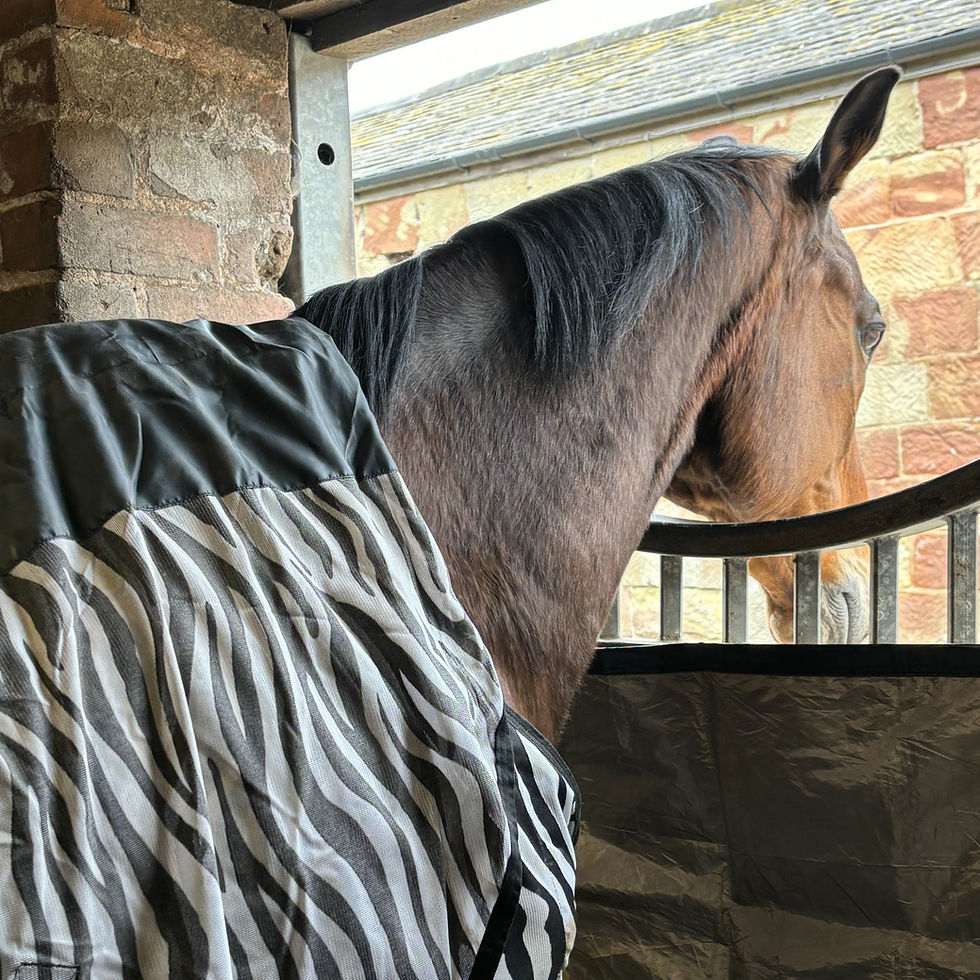
Even with good management, some horses become frustrated or seek attention, especially if the stable limits social interaction. Door kicking, fence-biting, shouting for horses, excessive pawing and nipping over stable doors are common behaviours seen during prolonged confinement. Unfortunately, these behaviours can quickly become habitual if not addressed early, making them harder to break once the horse returns to normal turnout.
A Practical Solution: The e-Stall Guard
One tool that has proven effective in managing unwanted stable behaviours during box rest is the e-Stall Guard from NN Solutions. Designed as a self-regulating and holistic training aid, it gently discourages behaviours such as door kicking or leaning over doors. By providing a physical but unobtrusive barrier, it helps maintain safety while reducing opportunities for repetitive or attention-seeking behaviours to develop.
The e-Stall Guard is particularly useful because it can be used from the very first day of box rest. It is lightweight, portable and easy to move between stables, making it an invaluable addition to any yard’s management toolkit. Whether dealing with a temporary rehabilitation case or a horse prone to stable vices, having the e-Stall Guard on hand offers yard managers a practical, proven and welfare-friendly option.
Supporting Equine Welfare Throughout Box Rest
Box rest will never be a perfect environment for horses, but with thoughtful planning, enrichment and appropriate behaviour-management tools, it can be a safer and more comfortable experience. Keeping horses mentally stimulated, physically safe and emotionally supported is key to maintaining good equine welfare and preventing long-term behavioural issues.
For yards and horse owners alike, proactive management is essential. By using enrichment strategies, monitoring behaviour closely and incorporating supportive tools like the e-Stall Guard, you can help ensure your horse stays as happy and calm as possible during their recovery.


Comments